Buy koupittridicak.com ?
We are moving the project
koupittridicak.com .
Are you interested in purchasing the domain
koupittridicak.com ?
domain@kv-gmbh.de · 0541-91531010
Buy koupittridicak.com ?
How can adverbial clauses be transformed into adverbial phrases?
Adverbial clauses can be transformed into adverbial phrases by removing the subject and verb of the clause and keeping only the modifying words. This results in a shorter phrase that still conveys the same information as the original clause. For example, the adverbial clause "When the sun sets" can be transformed into the adverbial phrase "At sunset." This transformation helps to simplify sentences and make them more concise. **
What are adverbial clauses and what are adverbial determinations? Help!
Adverbial clauses are groups of words that function as adverbs in a sentence, providing information about time, place, manner, or reason. They often begin with subordinating conjunctions such as "when," "where," "how," or "why." Adverbial determiners, on the other hand, are words or phrases that modify a verb, adjective, or other adverb by providing additional information about time, frequency, degree, or manner. They can include words like "often," "very," "soon," or "almost." Both adverbial clauses and adverbial determiners help to add detail and specificity to a sentence. **


Similar search terms for Adverbial
Top-Angebote
Products related to Adverbial:
-
Tiny Tots Teens Trends Drawer Game Early Education Montessori Wooden Pitch Ball Box Preschool Learning Training Toy Drawer Game Early Education Montessori Wooden Pitch Ball Box Preschool Learning Training ToyThis Montessori Wooden Pitch Ball Box Drawer Game is a thoughtfully designed earlyeducation toy that transforms playtime into purposeful learning. Crafted for toddlers and preschoolers, it offers a handson, engaging way to support key developmental...39,97 $*Shipping: 0,00 $Secure redirect to the provider
-
Tiny Tots Teens Trends Montessori Baby Training, Infant Puzzle Early Education Toys, Busy Hand Grasping Ball For Baby Montessori Baby Training, Infant Puzzle Early Education Toys, Busy Hand Grasping Ball For BabyIntroduce Your Baby to the World of Learning The Infant Puzzle Early Education Toys are designed to foster cognitive and physical development in your little one. This Multifunctional Busy Ball for Montessori Baby Training is ideal for enhancing...79,97 $*Shipping: 0,00 $Secure redirect to the provider
-
Modern Mode Marketplace Brain Response Battle Cup Set Fun Baby Stack Game For Early Education, Speed And HandEye Coordination Training Brain Response Battle Cup Set Fun Baby Stack Game For Early Education, Speed And HandEye Coordination TrainingUnlock your child's potential with the Brain Response Battle Cup Set! Perfect for young learners, this exciting game combines fun and education to develop handeye coordination and response speed. Ideal for babies and toddlers, it helps improve...29,97 $*Shipping: 0,00 $Secure redirect to the provider




-
How can adverbial phrases be used instead of adverbial clauses?
Adverbial phrases can be used instead of adverbial clauses to provide additional information about the verb, adjective, or adverb in a sentence. Adverbial phrases are often shorter and more concise than adverbial clauses, making them a more efficient way to convey the same information. For example, instead of saying "When the sun sets, we will go for a walk," you can use the adverbial phrase "At sunset, we will go for a walk." This simplifies the sentence while still conveying the same time-related information. **
-
How do you transform adverbial determinations into adverbial clauses? Please help.
To transform adverbial determinations into adverbial clauses, you need to add a subject and a verb to the adverbial determination. For example, the adverbial determination "after the party" can be transformed into the adverbial clause "after we left the party." This transformation allows the adverbial determination to function as a complete clause within a sentence. Additionally, you may need to adjust the tense and structure of the adverbial determination to fit the context of the sentence. **
-
What are adverbial particles?
Adverbial particles are words that are used to modify verbs, adjectives, or other adverbs. They are often used to indicate direction, location, or manner. In English, adverbial particles are commonly used in phrasal verbs, where they are combined with a verb to create a new meaning. For example, in the phrasal verb "look up," the adverbial particle "up" modifies the meaning of the verb "look." **
-
What is the difference between formulating an adverbial clause as an adverbial phrase and formulating an adverbial phrase as an adverbial clause? Aren't they the same thing?
Formulating an adverbial clause as an adverbial phrase involves expressing a clause (a group of words containing a subject and a verb) as a single adverbial phrase, typically by removing the subject and verb. On the other hand, formulating an adverbial phrase as an adverbial clause involves expanding a phrase (a group of related words without a subject and verb) into a full clause by adding a subject and verb. While both adverbial clauses and adverbial phrases serve to modify verbs, adjectives, or other adverbs, they are not the same thing due to their structural differences and the presence or absence of a subject and verb. **

What is an instrumental adverbial?
An instrumental adverbial is a type of adverbial that provides information about the means or instrument used to perform an action. It answers the question "how?" or "by what means?" For example, in the sentence "She cut the vegetables with a knife," the adverbial phrase "with a knife" is instrumental, indicating the tool used to perform the action of cutting. Instrumental adverbials are important for providing additional details about the action being described. **
How do adverbial clauses work?
Adverbial clauses function as adverbs within a sentence, providing information about time, place, manner, condition, purpose, or reason. They often begin with subordinating conjunctions such as "when," "where," "how," "if," "because," and "although." These clauses can modify verbs, adjectives, or other adverbs, adding detail and context to the main clause. Adverbial clauses can be placed at the beginning, middle, or end of a sentence, and they help to connect ideas and show the relationship between different parts of a sentence. **
Top-Angebote
Products related to Adverbial:
-
Uplifted Finds Interactive Ring Toss Training System Professional Early Education & Pediatric Fitness Infrastructure Interactive Ring Toss Training System Professional Early Education & Pediatric Fitness InfrastructureCommand ultimate developmental confidence with the Interactive Ring Toss Training System, a highperformance educational solution specifically engineered to act as a comprehensive tool for elite organization and superior technical ergonomics. Built...52,97 $*Shipping: 0,00 $Secure redirect to the provider
-
Multicon Wholesale Hub Backyard Dog Agility Training Kit With Jumps, Tunnel & Obstacle Course For Dogs Backyard Dog Agility Training Kit With Jumps, Tunnel & Obstacle Course For DogsEnhance your dog's agility skills and create memorable bonding moments with the Backyard Dog Agility Training Kit. This versatile kit features a variety of obstacles like jumps, weave poles, and a tunnel, perfect for energetic dogs and their owners....168,97 $*Shipping: 0,00 $Secure redirect to the provider
-
Tiny Tots Teens Trends Drawer Game Early Education Montessori Wooden Pitch Ball Box Preschool Learning Training Toy Drawer Game Early Education Montessori Wooden Pitch Ball Box Preschool Learning Training ToyThis Montessori Wooden Pitch Ball Box Drawer Game is a thoughtfully designed earlyeducation toy that transforms playtime into purposeful learning. Crafted for toddlers and preschoolers, it offers a handson, engaging way to support key developmental...39,97 $*Shipping: 0,00 $Secure redirect to the provider
-
Tiny Tots Teens Trends Montessori Baby Training, Infant Puzzle Early Education Toys, Busy Hand Grasping Ball For Baby Montessori Baby Training, Infant Puzzle Early Education Toys, Busy Hand Grasping Ball For BabyIntroduce Your Baby to the World of Learning The Infant Puzzle Early Education Toys are designed to foster cognitive and physical development in your little one. This Multifunctional Busy Ball for Montessori Baby Training is ideal for enhancing...79,97 $*Shipping: 0,00 $Secure redirect to the provider
-
How can adverbial clauses be transformed into adverbial phrases?
Adverbial clauses can be transformed into adverbial phrases by removing the subject and verb of the clause and keeping only the modifying words. This results in a shorter phrase that still conveys the same information as the original clause. For example, the adverbial clause "When the sun sets" can be transformed into the adverbial phrase "At sunset." This transformation helps to simplify sentences and make them more concise. **
-
What are adverbial clauses and what are adverbial determinations? Help!
Adverbial clauses are groups of words that function as adverbs in a sentence, providing information about time, place, manner, or reason. They often begin with subordinating conjunctions such as "when," "where," "how," or "why." Adverbial determiners, on the other hand, are words or phrases that modify a verb, adjective, or other adverb by providing additional information about time, frequency, degree, or manner. They can include words like "often," "very," "soon," or "almost." Both adverbial clauses and adverbial determiners help to add detail and specificity to a sentence. **
-
How can adverbial phrases be used instead of adverbial clauses?
Adverbial phrases can be used instead of adverbial clauses to provide additional information about the verb, adjective, or adverb in a sentence. Adverbial phrases are often shorter and more concise than adverbial clauses, making them a more efficient way to convey the same information. For example, instead of saying "When the sun sets, we will go for a walk," you can use the adverbial phrase "At sunset, we will go for a walk." This simplifies the sentence while still conveying the same time-related information. **
-
How do you transform adverbial determinations into adverbial clauses? Please help.
To transform adverbial determinations into adverbial clauses, you need to add a subject and a verb to the adverbial determination. For example, the adverbial determination "after the party" can be transformed into the adverbial clause "after we left the party." This transformation allows the adverbial determination to function as a complete clause within a sentence. Additionally, you may need to adjust the tense and structure of the adverbial determination to fit the context of the sentence. **
Similar search terms for Adverbial
-
Modern Mode Marketplace Brain Response Battle Cup Set Fun Baby Stack Game For Early Education, Speed And HandEye Coordination Training Brain Response Battle Cup Set Fun Baby Stack Game For Early Education, Speed And HandEye Coordination TrainingUnlock your child's potential with the Brain Response Battle Cup Set! Perfect for young learners, this exciting game combines fun and education to develop handeye coordination and response speed. Ideal for babies and toddlers, it helps improve...29,97 $*Shipping: 0,00 $Secure redirect to the provider
-
Klokick 50FT Ninja Warrior Obstacle Course for Kids with Swing Outdoor Playset Backyard Toys Training Equipment SetAbout the item: Slackline Swing Set Hapfan’s ninja obstacle course now includes a saucer swing, making it a versatile outdoor playset that doubles as a portable slackline and swing combo—perfect for dynamic backyard fun!139,99 $*Shipping: 0,00 $Secure redirect to the provider
-
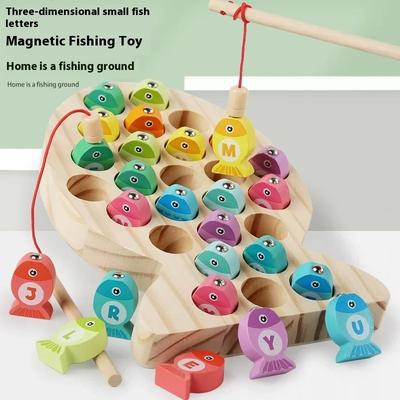
Inspire Select Wooden Montessori Fishing Toy Set Kids Number & Alphabet Learning Game For Early Education Training lettersMake learning fun and interactive with a playful educational experience. This Montessori fishing toy helps children develop essential skills while enjoying handson play. Designed for toddlers and young kids, this wooden learning toy combines...96,97 $*Shipping: 0,00 $Secure redirect to the provider
-
What are adverbial particles?
Adverbial particles are words that are used to modify verbs, adjectives, or other adverbs. They are often used to indicate direction, location, or manner. In English, adverbial particles are commonly used in phrasal verbs, where they are combined with a verb to create a new meaning. For example, in the phrasal verb "look up," the adverbial particle "up" modifies the meaning of the verb "look." **
-
What is the difference between formulating an adverbial clause as an adverbial phrase and formulating an adverbial phrase as an adverbial clause? Aren't they the same thing?
Formulating an adverbial clause as an adverbial phrase involves expressing a clause (a group of words containing a subject and a verb) as a single adverbial phrase, typically by removing the subject and verb. On the other hand, formulating an adverbial phrase as an adverbial clause involves expanding a phrase (a group of related words without a subject and verb) into a full clause by adding a subject and verb. While both adverbial clauses and adverbial phrases serve to modify verbs, adjectives, or other adverbs, they are not the same thing due to their structural differences and the presence or absence of a subject and verb. **
-
What is an instrumental adverbial?
An instrumental adverbial is a type of adverbial that provides information about the means or instrument used to perform an action. It answers the question "how?" or "by what means?" For example, in the sentence "She cut the vegetables with a knife," the adverbial phrase "with a knife" is instrumental, indicating the tool used to perform the action of cutting. Instrumental adverbials are important for providing additional details about the action being described. **
-
How do adverbial clauses work?
Adverbial clauses function as adverbs within a sentence, providing information about time, place, manner, condition, purpose, or reason. They often begin with subordinating conjunctions such as "when," "where," "how," "if," "because," and "although." These clauses can modify verbs, adjectives, or other adverbs, adding detail and context to the main clause. Adverbial clauses can be placed at the beginning, middle, or end of a sentence, and they help to connect ideas and show the relationship between different parts of a sentence. **
* All prices are inclusive of VAT and, if applicable, plus shipping costs. The offer information is based on the details provided by the respective shop and is updated through automated processes. Real-time updates do not occur, so deviations can occur in individual cases. ** Note: Parts of this content were created by AI.