Buy koupittridicak.com ?
We are moving the project
koupittridicak.com .
Are you interested in purchasing the domain
koupittridicak.com ?
domain@kv-gmbh.de · 0541-91531010
Buy koupittridicak.com ?
Which shampoo from the drugstore is suitable for bonding extensions?
When looking for a shampoo suitable for bonding extensions from the drugstore, it's important to choose a gentle, sulfate-free formula to avoid damaging the bonds. Look for shampoos specifically designed for use with hair extensions, as they are formulated to be gentle and nourishing. Additionally, choose a shampoo that is moisturizing and free of harsh chemicals to help maintain the health and longevity of the extensions. Some popular drugstore options for bonding extensions include OGX Anti-Breakage + Keratin Oil Shampoo and L'Oréal Paris Elvive Total Repair 5 Repairing Shampoo. **
What distinguishes all types of bonding: ionic bonding, metallic bonding, and covalent bonding?
Ionic bonding involves the transfer of electrons from one atom to another, resulting in the formation of positively and negatively charged ions that are attracted to each other. Metallic bonding involves the sharing of electrons among a sea of delocalized electrons, creating a "sea of electrons" that holds the metal atoms together. Covalent bonding involves the sharing of electrons between atoms, resulting in the formation of molecules. Despite their differences, all types of bonding involve the interaction of electrons between atoms to form stable chemical compounds. **
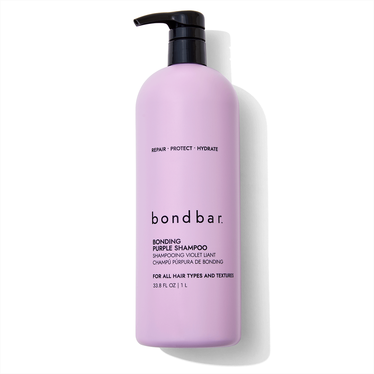

Similar search terms for Bondbar-Bonding-Shampoo-33
Top-Angebote
Products related to Bondbar-Bonding-Shampoo-33:
-
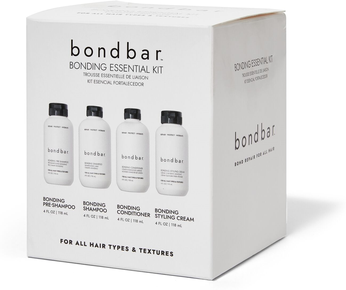
Bondbar Bonding Essential Kitbondbar Bonding Essentials Kit comes with everything you need to kickstart your healthy hair care routine. It includes bondbar Bonding Pre-Shampoo, bondbar Bonding Shampoo, bondbar Bonding Conditioner and bondbar Bonding Styling Cream. Hair is made...29,99 $*Shipping: 0,00 $Secure redirect to the provider
-
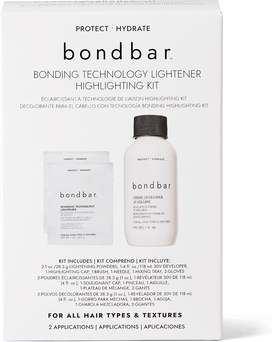
Bondbar Bonding Technology Lightener Highlighting Kit eachbondbar Bonding Technology Lightener Highlighting Kit provides the current bondbar Bonding Technology Lightener and 30v Creme Developer, designed to protect and hydrate hair bonds during the lightening process. Compared to traditional lighteners,...22,89 $*Shipping: 0,00 $Secure redirect to the provider
-
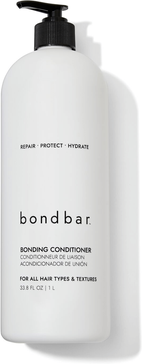
Bondbar Bonding Conditioner 33.8 oz 33.8 Fl Ozbondbar is a bond building repair system that helps to protect, strengthen and hydrate hair.A moisturizing and reparative Conditioner that leaves hair shiny and feeling healthier.When used as part of the Bondbar system, reduces breakage during...32,99 $*Shipping: 0,00 $Secure redirect to the provider
-
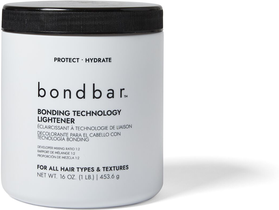
Bondbar Bonding Technology Lightener Tub 16 oz 16 Ozbondbar Bonding Technology Lightener is an innovative formula designed to protect and hydrate hair bonds during the lightening process. Compared to traditional lighteners, this on- and off-scalp powder formula reduces the potential for damage and...25,49 $*Shipping: 0,00 $Secure redirect to the provider
-
What distinguishes all types of chemical bonding: ionic bonding, metallic bonding, and covalent bonding?
The main distinction among the three types of chemical bonding lies in the way atoms are held together. In ionic bonding, atoms transfer electrons to achieve a stable electron configuration. Metallic bonding involves a sea of delocalized electrons shared among a lattice of metal atoms. Covalent bonding, on the other hand, involves the sharing of electrons between atoms to achieve a stable electron configuration. Each type of bonding results in different properties and behaviors of the substances formed. **
-
What are examples of ionic bonding, covalent bonding, and metallic bonding?
Ionic bonding occurs when one atom transfers electrons to another, resulting in the formation of positively and negatively charged ions that are attracted to each other. An example of ionic bonding is the bond between sodium and chlorine in sodium chloride (table salt). Covalent bonding occurs when atoms share electrons to achieve a full outer shell. An example of covalent bonding is the bond between two hydrogen atoms in a molecule of hydrogen gas (H2). Metallic bonding occurs in metals, where the outer electrons of the atoms are delocalized and free to move throughout the structure, creating a "sea" of electrons that hold the metal atoms together. An example of metallic bonding is the bond between atoms in a piece of copper metal. **
-
What is the difference between ionic bonding, covalent bonding, and metallic bonding?
Ionic bonding involves the transfer of electrons from one atom to another, resulting in the formation of positively and negatively charged ions that are held together by electrostatic forces. Covalent bonding involves the sharing of electrons between atoms to achieve a stable electron configuration. Metallic bonding occurs in metals, where electrons are delocalized and free to move throughout the material, creating a "sea of electrons" that hold the metal atoms together. Each type of bonding results in different properties and behaviors of the substances involved. **
-
Who is familiar with chemistry in ionic bonding, metallic bonding, and molecular bonding?
Individuals who have studied chemistry at a high school or college level are likely to be familiar with ionic bonding, metallic bonding, and molecular bonding. This includes students, teachers, and professionals in the fields of chemistry, chemical engineering, and materials science. Additionally, those who have a general interest in science and have taken courses or done independent study in chemistry may also have knowledge of these types of chemical bonding. **

What is the difference between covalent bonding and ionic bonding?
Covalent bonding involves the sharing of electrons between atoms to achieve a stable electron configuration, typically between nonmetals. Ionic bonding involves the transfer of electrons from one atom to another, resulting in the formation of positively and negatively charged ions that are attracted to each other, typically between a metal and a nonmetal. In covalent bonding, the atoms involved have similar electronegativities, while in ionic bonding, there is a significant difference in electronegativities between the atoms. **
What are the similarities between ionic bonding and covalent bonding?
Both ionic bonding and covalent bonding involve the sharing or transfer of electrons between atoms to achieve a stable electron configuration. In both types of bonding, the goal is for each atom to achieve a full outer electron shell. Additionally, both types of bonding result in the formation of a compound with a neutral charge. However, the key difference between the two is that ionic bonding involves the transfer of electrons from one atom to another, while covalent bonding involves the sharing of electrons between atoms. **
Top-Angebote
Products related to Bondbar-Bonding-Shampoo-33:
-
Bondbar Bonding Shampoo 33.8 oz 33.8 Fl Ozbondbar Bonding Shampoo gently cleanses, protects, repairs and hydrates all hair types and textures — making it the perfect addition to your wash-day routine. It also restores much-needed moisture, adds stunning shine and prevents frizz and flyaways...32,99 $*Shipping: 0,00 $Secure redirect to the provider
-
Bondbar Bonding Essential Kitbondbar Bonding Essentials Kit comes with everything you need to kickstart your healthy hair care routine. It includes bondbar Bonding Pre-Shampoo, bondbar Bonding Shampoo, bondbar Bonding Conditioner and bondbar Bonding Styling Cream. Hair is made...29,99 $*Shipping: 0,00 $Secure redirect to the provider
-
Bondbar Bonding Technology Lightener Highlighting Kit eachbondbar Bonding Technology Lightener Highlighting Kit provides the current bondbar Bonding Technology Lightener and 30v Creme Developer, designed to protect and hydrate hair bonds during the lightening process. Compared to traditional lighteners,...22,89 $*Shipping: 0,00 $Secure redirect to the provider
-
Which shampoo from the drugstore is suitable for bonding extensions?
When looking for a shampoo suitable for bonding extensions from the drugstore, it's important to choose a gentle, sulfate-free formula to avoid damaging the bonds. Look for shampoos specifically designed for use with hair extensions, as they are formulated to be gentle and nourishing. Additionally, choose a shampoo that is moisturizing and free of harsh chemicals to help maintain the health and longevity of the extensions. Some popular drugstore options for bonding extensions include OGX Anti-Breakage + Keratin Oil Shampoo and L'Oréal Paris Elvive Total Repair 5 Repairing Shampoo. **
-
What distinguishes all types of bonding: ionic bonding, metallic bonding, and covalent bonding?
Ionic bonding involves the transfer of electrons from one atom to another, resulting in the formation of positively and negatively charged ions that are attracted to each other. Metallic bonding involves the sharing of electrons among a sea of delocalized electrons, creating a "sea of electrons" that holds the metal atoms together. Covalent bonding involves the sharing of electrons between atoms, resulting in the formation of molecules. Despite their differences, all types of bonding involve the interaction of electrons between atoms to form stable chemical compounds. **
-
What distinguishes all types of chemical bonding: ionic bonding, metallic bonding, and covalent bonding?
The main distinction among the three types of chemical bonding lies in the way atoms are held together. In ionic bonding, atoms transfer electrons to achieve a stable electron configuration. Metallic bonding involves a sea of delocalized electrons shared among a lattice of metal atoms. Covalent bonding, on the other hand, involves the sharing of electrons between atoms to achieve a stable electron configuration. Each type of bonding results in different properties and behaviors of the substances formed. **
-
What are examples of ionic bonding, covalent bonding, and metallic bonding?
Ionic bonding occurs when one atom transfers electrons to another, resulting in the formation of positively and negatively charged ions that are attracted to each other. An example of ionic bonding is the bond between sodium and chlorine in sodium chloride (table salt). Covalent bonding occurs when atoms share electrons to achieve a full outer shell. An example of covalent bonding is the bond between two hydrogen atoms in a molecule of hydrogen gas (H2). Metallic bonding occurs in metals, where the outer electrons of the atoms are delocalized and free to move throughout the structure, creating a "sea" of electrons that hold the metal atoms together. An example of metallic bonding is the bond between atoms in a piece of copper metal. **
Similar search terms for Bondbar-Bonding-Shampoo-33
-
Bondbar Bonding Conditioner 33.8 oz 33.8 Fl Ozbondbar is a bond building repair system that helps to protect, strengthen and hydrate hair.A moisturizing and reparative Conditioner that leaves hair shiny and feeling healthier.When used as part of the Bondbar system, reduces breakage during...32,99 $*Shipping: 0,00 $Secure redirect to the provider
-
Bondbar Bonding Technology Lightener Tub 16 oz 16 Ozbondbar Bonding Technology Lightener is an innovative formula designed to protect and hydrate hair bonds during the lightening process. Compared to traditional lighteners, this on- and off-scalp powder formula reduces the potential for damage and...25,49 $*Shipping: 0,00 $Secure redirect to the provider
-
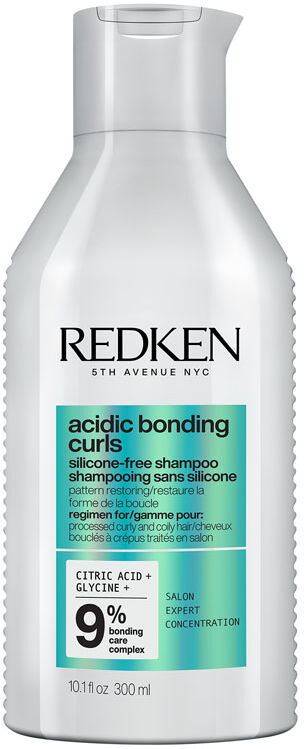
Redken Acidic Bonding Curls Shampoo 300mlRepair inner curl strength and restore curl pattern with Redken's Acidic Bonding Curls! The Acidic Bonding Curls Shampoo gently cleanses and detangles curly and coily hair, types 3A - 4C. Acidic Bonding Curls is powered by the Curl Bond Technology which penetrates the hair cortex to build bonds and repair curl strength from the inside-out, whilst Citric Acid and Glycine helps rebalance hair back to its healthiest pH for healthy-feeling hair. The formula is also infused with natural oils such as avocado oil, to help keep curls feeling hydrated. As a result, broken inner bonds are repaired from the inside and the curl pattern is enhanced with natural movement. The range is also sulfate-free to provide gentle cleansing and silicone-free for lightweight, bouncy and curls which feel hydrated. Ingredients: 1218391RK44 - INGREDIENTS: AQUA / WATER • SODIUM COCOYL ISETHIONATE • DECYL GLUCOSIDE • COCAMIDOPROPYL BETAINE • SORBITOL • CITRIC ACID • HYDROXYETHYL UREA • POTASSIUM HYDROXIDE • POTASSIUM COCOYL GLYCINATE • PPG-5-CETETH-20 • PANTHENOL • SODIUM BENZOATE • HYDROXYPROPYL GUAR HYDROXYPROPYLTRIMONIUM CHLORIDE • SODIUM CHLORIDE • PEG-55 PROPYLENE GLYCOL OLEATE • PROPYLENE GLYCOL • PARFUM / FRAGRANCE • CAPRYLYL GLYCOL • ACRYLATES/C10-30 ALKYL ACRYLATE CROSSPOLYMER • PEG-150 DISTEARATE • POLYQUATERNIUM-10 • POTASSIUM COCOATE • COCO-CAPRYLATE/CAPRATE • SALICYLIC ACID • GLYCOL DISTEARATE • BUTYROSPERMUM PARKII BUTTER / SHEA BUTTER • PERSEA GRATISSIMA OIL / AVOCADO OIL • LIMONENE • GLYCINE • COCO-BETAINE • LINALOOL • TOCOPHEROL • HELIANTHUS ANNUUS SEED OIL / SUNFLOWER SEED OIL • ROSMARINUS OFFICINALIS LEAF EXTRACT / ROSEMARY LEAF EXTRACT (F.I.L. Z70038193/2).22,00 £*Shipping: 0,00 £Secure redirect to the provider
-
Redken Acidic Bonding Concentrate Shampoo 1000 mlHealth and Beauty Shampoos Redken Acidic Bonding Concentrate Shampoo 1000 ml What is Acidic Bonding Concentrate Shampoo? Acidic Bonding Concentrate Shampoo is an innovative hair care product specifically designed to restore and strengthen the structure of damaged hair. Its unique formula, enriched with acidic ingredients, acts inside the hair fiber, providing deep cleansing while helping to balance the hair's pH. This shampoo is ideal for all hair types, especially those that have been subjected to chemical treatments, heat or environmental damage. Benefits: Acidic Bonding Concentrate Shampoo offers a wide range of benefits that will transform your hair care routine: - **Repairs damaged hair**: Its concentrated formula works to repair hair bonds, helping to restore strength and elasticity. - **Increases shine**: This shampoo revitalizes hair, leaving it with a healthy, radiant shine. - **Damage Protection**: Helps protect hair from future damage caused by heat and chemicals. - **Improves manageability**: Facilitates combing, reducing frizz and improving hair texture. - **pH balanced**: Maintains the hair's pH balance, which is essential for its long-term health. Who is it for? Acidic Bonding Concentrate Shampoo is perfect for: - **People with damaged hair**: Ideal for those who have subjected their hair to chemical or thermal processes. - **Dyed Hair**: Especially beneficial for those looking to maintain the color and vibrant health of their hair. - **Anyone who wants healthier hair**: If you want stronger, shinier, easier to comb hair, this shampoo is for you. How do I apply it? Using Acidic Bonding Concentrate Shampoo is simple and effective. Follow these steps for best results: 1. **Wet your hair**: Start by rinsing your hair thoroughly with warm water. 2. **Apply Shampoo**: Take an appropriate amount of Acidic Bonding Concentrate Shampoo and apply it to your scalp and hair. 3. **Gently massage**: Gently massage your scalp to activate the shampoo ingredients. 4. **Rinse well**: Make sure to rinse the product completely. 5. **Repeat if necessary**: For optimal results, you can repeat the process if your hair requires it. 6. **Use conditioner**: Complete your routine with Acidic Bonding Concentrate to enhance results. Buy Acidic Bonding Concentrate Shampoo Don't wait any longer to transform your hair. Buy Acidic Bonding Concentrate Shampoo today and discover the difference it can make in your hair care routine. With its advanced formula, your hair will not only look better, but it will also feel stronger and healthier. Make this shampoo your ally in the fight against hair damage!39,06 £*Shipping: 4,99 £Secure redirect to the provider
-
What is the difference between ionic bonding, covalent bonding, and metallic bonding?
Ionic bonding involves the transfer of electrons from one atom to another, resulting in the formation of positively and negatively charged ions that are held together by electrostatic forces. Covalent bonding involves the sharing of electrons between atoms to achieve a stable electron configuration. Metallic bonding occurs in metals, where electrons are delocalized and free to move throughout the material, creating a "sea of electrons" that hold the metal atoms together. Each type of bonding results in different properties and behaviors of the substances involved. **
-
Who is familiar with chemistry in ionic bonding, metallic bonding, and molecular bonding?
Individuals who have studied chemistry at a high school or college level are likely to be familiar with ionic bonding, metallic bonding, and molecular bonding. This includes students, teachers, and professionals in the fields of chemistry, chemical engineering, and materials science. Additionally, those who have a general interest in science and have taken courses or done independent study in chemistry may also have knowledge of these types of chemical bonding. **
-
What is the difference between covalent bonding and ionic bonding?
Covalent bonding involves the sharing of electrons between atoms to achieve a stable electron configuration, typically between nonmetals. Ionic bonding involves the transfer of electrons from one atom to another, resulting in the formation of positively and negatively charged ions that are attracted to each other, typically between a metal and a nonmetal. In covalent bonding, the atoms involved have similar electronegativities, while in ionic bonding, there is a significant difference in electronegativities between the atoms. **
-
What are the similarities between ionic bonding and covalent bonding?
Both ionic bonding and covalent bonding involve the sharing or transfer of electrons between atoms to achieve a stable electron configuration. In both types of bonding, the goal is for each atom to achieve a full outer electron shell. Additionally, both types of bonding result in the formation of a compound with a neutral charge. However, the key difference between the two is that ionic bonding involves the transfer of electrons from one atom to another, while covalent bonding involves the sharing of electrons between atoms. **
* All prices are inclusive of VAT and, if applicable, plus shipping costs. The offer information is based on the details provided by the respective shop and is updated through automated processes. Real-time updates do not occur, so deviations can occur in individual cases. ** Note: Parts of this content were created by AI.